Hiển thị các bài đăng có nhãn Mental Development. Hiển thị tất cả bài đăng

Thứ Tư, 22 tháng 6, 2016

THOUGHTS ON TEACHING AND PLAYER DEVELOPMENT FROM BILL WALSH

The following comes from one of the absolute best coaching books I've every read, "Finding the Winning Edge," by Bill Walsh:

Drive the players to concentrate. Be assertive in your insistence that they focus on the task at hand.

Individualize your teaching approach to fit certain individuals, when necessary. Give extra time to those players who need it.

Be as precise as possible when teaching. Always use the system’s terminology as a common language.

Be patient, but demanding. Require your players to adhere to proper techniques at all times.

Teach the skills progressively. Adhere to a systematic methodology of teaching that allows the players to improve and enhances their level of confidence in your competence and professionalism.

Keep your finger on the pulse of the situation. Be alert to the intensity level of the players. Be sensitive to signs of those factors which can affect the learning curve. Never overlook the fundamental reality of the teaching axiom, “quality repetitions are the mother of all learning.”

Keep the meetings quality, not quantity, oriented. Use a variety of learning tools to enhance the learning environment and to help stimulate the players’ level of concentration and focus.

Demonstrate the highest level of knowledge about the subject matter being taught.

Teach the players in a professional manner. Unless you’re trying to elicit a specific emotional response from your players, refrain from screaming and demonstrative behavior. Keep in mind that such behavior seldom, if ever, enhances the learning curve particularly if the subject matter involves technical information.

Evaluate the players’ performance on a daily basis to ensure that they are progressively mastering the techniques required to perform the tasks they are assigned in an effective and efficient manner.

Rapidity is the essence of war; take advantage of the enemy’s unreadiness, make your way by unexpected routes, and attach unguarded spots.

Another teaching technique that has proven to be very effective is to have players emulate the techniques and actions of other athletes. For example, if players watch videos showing Jerry Rice run a particular pattern in a certain way, you (as the head coach) can single out and stress particular coaching points, by using Rice as the case in point.

All factors considered, players tend to respond more favorably to an actual visual representation of a particular teaching point than to tan abstract illustration of that point drawn up on a chalkboard or written up in a playbook. This learning technique is typically referred to as “modeling.”

"Win the war, then win the fight."


Thứ Bảy, 18 tháng 6, 2016

DECIDE. COMMIT. ACT. SUCCEED. REPEAT

The following comes from the book "Relentless" by Tim Grover:

To be the best, whether in sports of business or any other aspect of life, it’s never enough to just get to the top; you have to stay there, and then you have to climb higher, because there’s always someone right behind you trying to catch up. Most people are willing to settle for “good enough.” But if you want to be unstoppable, those words mean nothing to you. Being the best means engineering your life so you never stop until you get what you want, and then you keep going until you get what’s next. And then you go for even more.


Decide. Commit. Act. Succeed. Repeat

Thứ Năm, 16 tháng 6, 2016

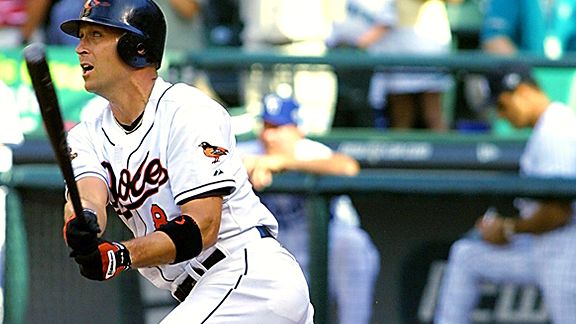
CAL RIPKEN JR. ON CONSISTENCY

We constantly preach to our players about being an "NBA Player" -- meaning "Next Best Action."  The best players don't dwell in the past.  They are on to the next play.  If they are thinking about the last play -- a missed shot, a turnover, a poor play be a teammate, a bad call by an official -- then they are not give 100% of their mental capacity to the most important play of the game -- the next one.  After all, as Sue Gunter would constantly tell her teams, "The next possession is the only one we have control of."

By now I am hopefully that you've all heard of The Players Tribune.  If not it needs to be a must read for you and your players.  It is articles that are written completely by athletes.  Not coaches. Not writers.  It gives us an amazing perspective and insight into what some of the best are thinking in so many different situations.

One of the more recent entries came from Cal Ripken, Jr. in an article titled "The Best Play I Ever Made."  One of the take aways from the article was when Cal had failure on the field, an error or poor at bat, he always seemed to follow it up with success -- a good defensive play or a hit.  This is the Next Best Action attitude.  This is a look into Cal's mentality: 


"More often than not, whenever I made an error, I’d get a hit in my next at bat. If I struck out a few times, I’d be more likely to make a nice play in the field. Whatever I was struggling with, I tried to excel in another area to balance it out. I always viewed baseball as a constant internal battle within myself. You have to keep your emotions low when pressure is high, but play with passion when pressure was low. It’s not about focusing on perfection so much as on consistency."


EVENT + RESPONSE = OUTCOME (PART I)

In his book "Above the Line,"   Urban Meyer talks about a relationship he developed with Tim Kight, the founder of Focus 3 which is a leadership development firm.  What he learned, and applied with his football team became known as "the R Factor."  In fact, Chapter 2 of Meyer's book is completely dedicated to "The R Factor."

Here are a few take aways from that chapter:


This equation teaches something very important about the way life works.  We don't control the events in life, and we don't directly control the outcomes.  But we always have control over how we choose to respond.  How we respond means everything.

We call it the R Factor.

Every day you make R Factor decisions.

It is the factor that determines the quality of your life.

Coach Meyer says that they teach their team 6 R Factor disciplines:

R:1 Press Pause
We teach our players, in response to any situation they face, to press pause and ask: What does this situation require of me?

There are two important benefits of pressing pause:

A) It helps you avoid doing something foolish or harmful.
B) It focuses you on acting with purpose to accomplish your goals..

R:2 Get Your Mind Right
Elite performers win in their minds first.  The mind is a battleground where the greatest struggles take place. The thoughts that win the battle for your mind will direct your life.  Mental state affects physical performance. 

Getting your mind right means managing two things:

A) What you focus on
B) How you talk to yourself

Urban Meyer to his players: "The voice in your mind is a powerful force.  Take ownership of that force."

R:3 Step Up
It is your responsibility to understand the situation, be clear about what is required of you, then respond Above the Line.  This is what it means to step up.

Simply stated, Big E's and Big O's require Big R's.

Under pressure, we do not rise to the occasion. We rise or fall to the level of our training.  When contact is made, it is too late to train and build skill.

Every team faces some kind of adversity.  Mediocre teams are destroyed by it.  Good teams survive it.  Great teams get better because of it.

R:4 Adjust and Adapt
The ability to be flexible and responsive in today's competitive environment is a mandatory skill.  The best athletes and teams are exceptional at adjusting and adapting to challenging circumstances.

Here is another reality -- life will get increasingly difficult for you if you don't.

Every day you are creating or reinforcing habits in your life.  The question is, are they habits that help or habits that hold you back?

R:5 Make a Difference
Your R is an E for others.  Your attitude and behavior have a profound impact on your teammates and your coaches.  The quality of your relationships is determined by how you choose to manage the R.  You don't get the team you want -- you get the team you build.

Making a difference means taking complete ownership of the experience you give your teammates and the contributions you make to the culture of the team.

R:6 Build Skill
Talent is a gift.  Greatness is a choice.

Talent can take you to a level of ability that produces good results.  But talent by itself will not take you to the elite level.  Exceptional performance is the result of an uncommon level of focus and discipline in the pursuit of greatness.  Build skill every day and consistently get better.  Be coachable.  Train and practice Above the Line.  Be intentional and on purpose.  Complacency is the enemy of exceptional.  Grow beyond your talent.

Embrace discomfort.  Discomfort marks the place where the old ways meets the new way.  Discomfort indicates that change is about to happen.  Push through the pain.  If it doesn't challenge you, it will not change you.


Champions are made by how they manage their R.

Which Celtics should be in the running for NBA Awards? (podcast)

The  Boston Celtics  have completed the 2017-18 season with a 55-27 record, good for second place in the Eastern Conference. They wil...